Introduction
In an era where cyber threats are becoming increasingly sophisticated and the traditional network security perimeter is no longer enough to safeguard sensitive data, the concept of Zero Trust Architecture (ZTA) has emerged as a revolutionary paradigm in the realm of cybersecurity. The traditional approach of trusting users and devices once they are inside the network perimeter is being replaced by a more dynamic and proactive security model.
This blog will delve into the core principles of Zero Trust Architecture, explore its key components, discuss the benefits it offers, address the challenges in its implementation, and provide practical steps for organizations to build a robust Zero Trust Network. By the end, readers will have a comprehensive understanding of why Zero Trust is essential in today's cybersecurity landscape and how they can embark on the journey to implement this innovative security paradigm.
Evolution of Network Security
To appreciate the significance of Zero Trust Architecture, it's crucial to understand the evolution of network security. Traditional security models, such as the castle-and-moat approach, were designed with the assumption that threats would come from external sources. However, the rise of sophisticated cyber-attacks and the increasing prevalence of insider threats have exposed the limitations of these approaches.
Zero Trust Architecture represents a paradigm shift by acknowledging that threats can come from both outside and inside the network. It assumes that no entity—whether internal or external—should be trusted by default. This evolution is a response to the dynamic nature of modern business environments, where users access resources from various locations and devices.
Definition of Zero Trust Architecture
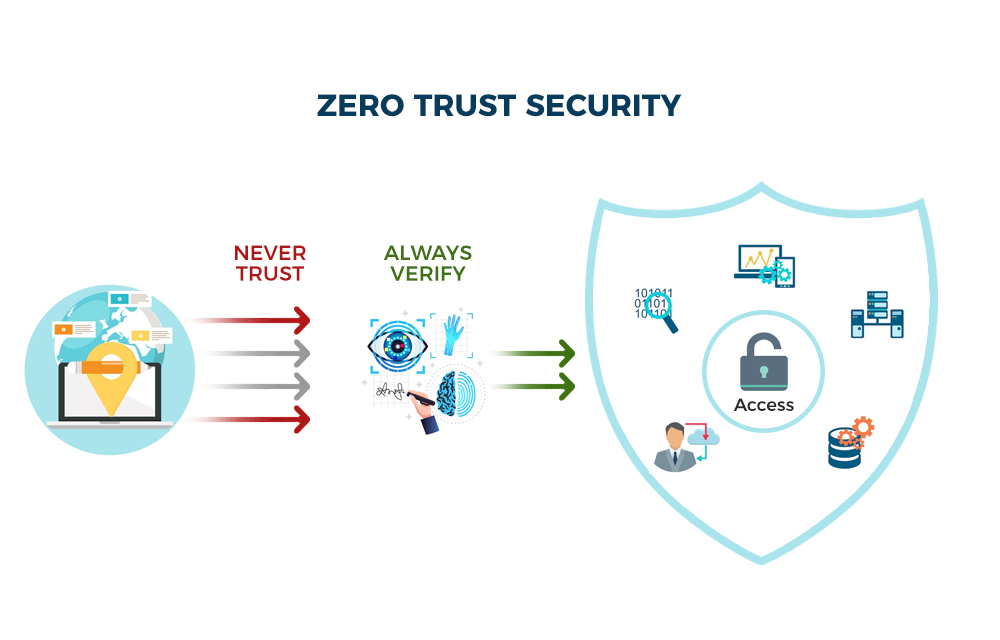
Zero Trust Architecture is not merely a technology but a comprehensive security framework that challenges the conventional notion of trust within network environments. In essence, the Zero Trust model is based primarily on the principle of "Never Trust, Always Verify." This means that instead of assuming that users and devices within the network are inherently trustworthy, every user, device, or application—regardless of its location—is continuously verified before being granted access to resources.
Importance of Implementing Zero Trust
As organizations continue to adopt cloud-based services, remote work becomes more prevalent, and the threat landscape evolves, the importance of implementing Zero Trust Architecture becomes paramount. Zero Trust not only enhances security but also aligns with the principles of least privilege access, micro-segmentation, and continuous monitoring.
Did you know?
Zero Trust architectures aim to consolidate and fortify decentralized networks, offering solutions to many common challenges.
Among the various aspects of Zero Trust implementation, multi-factor authentication (MFA) stands out as a significant area of advancement for organizations. MFA, being highly effective in thwarting account compromises, plays a crucial role in Zero Trust frameworks by addressing the shortcomings of traditional passwords.
In a genuine Zero Trust setup, MFA is employed universally, ensuring secure authentication for every access attempt, and thereby curtailing lateral movement within the network, thus minimizing potential damage in the event of a breach.
Progress in MFA adoption is notable, with 45.6% of SMEs having integrated MFA comprehensively, while 43.3% have deployed it selectively.
Expanding the implementation of MFA, especially where partially applied, serves as an effective strategy to kickstart a Zero Trust initiative.
Understanding Zero Trust Architecture
Core Principles
- Never Trust, Always Verify: Zero Trust Architecture fundamentally operates on the principle of never assuming trust implicitly. Continuous verification is essential regardless of whether a user or device is inside or outside the network perimeter. This principle challenges the traditional approach of granting broad access permissions based on network location and assumes that threats can originate from anywhere.
- Least Privilege Access: The principle of least privilege access guarantees that both individuals and systems receive only the essential level of access required for task execution. Organizations can mitigate the impact of security breaches and shrink the potential attack surface by restricting access rights. It aligns with the idea that users should have the bare minimum permissions required to accomplish their roles and responsibilities.
- Micro-Segmentation: Micro-segmentation entails the subdivision of the network into isolated segments, effectively limiting and mitigating the lateral spread of threats. Instead of relying on a single, monolithic security perimeter, micro-segmentation allows organizations to create specific security zones based on user roles, applications, or data sensitivity. This ensures that even if one segment is compromised, the entire network is not automatically at risk.
- Continuous Monitoring and Analytics: Traditional security models often lack real-time insights into network activities. The Zero Trust approach underscores the importance of ongoing monitoring and analytics for promptly identifying anomalies and potential security incidents. Organizations can proactively address security threats by utilizing advanced threat detection mechanisms and analytics, enabling the prompt identification of abnormal behavioral patterns and the swift implementation of preventive or mitigative measures against security breaches.

Key Components
- Identity and Access Management (IAM): Identity and Access Management (IAM) serves as a fundamental building block for the Zero Trust framework. It encompasses rigorous authentication and authorization procedures to validate the identity of both users and devices. The deployment of robust IAM guarantees that only entities with authenticated and authorized credentials can access network resources.
- Multi-Factor Authentication (MFA): MFA enhances security by necessitating users to present various forms of identification before gaining access to resources. This may encompass knowledge-based factors (passwords), possession-based elements (security tokens), or inherent characteristics (biometric data). The implementation of MFA substantially fortifies the authentication process.
- Network Segmentation: Segmenting the network entails partitioning it into isolated segments to restrict lateral movement in the event of a security breach. Zero Trust advocates for detailed segmentation determined by factors like user roles, device types, and application needs.
- Encryption: Encryption plays a crucial role in securing data in transit. Zero Trust advocates for end-to-end encryption to protect sensitive information as it travels across the network. This ensures that even if data is intercepted, it remains unreadable without the appropriate decryption keys.
- Security Analytics: Utilizing advanced tools and technologies, security analytics aims to observe network activities, identify anomalies, and pinpoint potential threats. The integration of artificial intelligence and machine learning enables organizations to improve their capacity to identify and address emerging security risks.
Steps to Build a Zero Trust Network
Building a Zero Trust Network involves a strategic and phased approach, focusing on key aspects such as identity and access management, network segmentation, and continuous monitoring. Here are the essential steps organizations can take to establish a robust Zero Trust Architecture:
Identify and Classify Assets:
- Asset Inventory: Begin by creating a comprehensive inventory of all assets, including devices, applications, and data repositories.
- Data Classification: Classify data based on sensitivity and importance. Understand which data requires the highest level of protection and prioritize accordingly.
Implement Strong Authentication Mechanisms:
- Multi-Factor Authentication (MFA): Enforce MFA across all access points to add an extra layer of security. This ensures that even if login credentials are compromised, unauthorized access is still prevented.
- Biometric Authentication: Consider incorporating biometric authentication methods, such as fingerprint or facial recognition, for an additional layer of identity verification.
Embrace Least Privilege Principle:
- User Roles and Permissions: Define clear user roles and associated permissions. Grant the least amount of access necessary for users to perform their tasks.
- Regular Audits: Conduct regular access reviews and audits to ensure that permissions align with current job responsibilities. Remove any unnecessary privileges promptly.
Network Segmentation Strategies:
- Zero Trust Micro-Segmentation:
- Identify critical applications and segment them into isolated zones.
- Implement micro-segmentation policies based on business needs and data sensitivity.
- Application-Centric Segmentation:
- Segregate applications based on their functions and criticality.
- Apply access controls that are specific to each application's requirements.
Continuous Monitoring and Analytics:
- Real-time Monitoring: Deploy tools that provide real-time monitoring of network activities.
- Behavioral Analytics: Implement behavioral analytics to detect unusual patterns or deviations from normal user behavior.
- Automated Incident Response: Integrate automated incident response mechanisms to react swiftly to identified security incidents.
Educate and Train Personnel:
- Security Awareness Training: Offer consistent training to staff on Zero Trust principles, emphasizing the significance of security and instructing them on identifying and reporting potential security threats.
- Simulated Phishing Exercises: Conduct simulated phishing exercises to enhance employees' ability to identify and resist social engineering attacks.
Establishing a Zero Trust Network requires constant assessment, adjustment, and enhancement to effectively tackle evolving security challenges.
The journey through the exploration of zero-trust architecture has illuminated the transformative power of rethinking traditional network security paradigms.
As we conclude this exploration, Zero Trust Architecture is not a one-time implementation but a continuous process of refinement and adaptation. Organizations that embrace Zero Trust are fortifying their defenses against existing threats and are better positioned to navigate the uncertainties of future cybersecurity challenges.
Also Read: The Basics of Data Management: A Comprehensive Guide
Posts you might also like...
Jun 24, 2025
Virtual Admin
Maximize Efficiency: Leverage a Virtual Project Manager
Is your team facing challenges with project delays, missed deadlines, and overwhelming administrative tasks? In today's fast-paced business environment, these issues can strain resources and lead to burnout among team members, ultimately hindering progress.
Sep 30, 2024
Virtual Admin
Beyond Task Management: Unlocking the Full Potential of Virtual Assistants
As businesses continue to adapt to the fast-paced digital landscape, the demand for virtual assistants has skyrocketed. While many people associate virtual assistants with basic task management—like scheduling appointments and handling emails—they can offer much more than that.
Sep 30, 2024
Virtual Admin
How to Ensure Data Security in Outsourcing?
In today’s interconnected business landscape, outsourcing has become essential for many organizations seeking efficiency and cost savings. However, this practice also introduces significant data security risks.